
Raw Materials for DIY Mixing: Glycerin & Propylene Glycol Guide
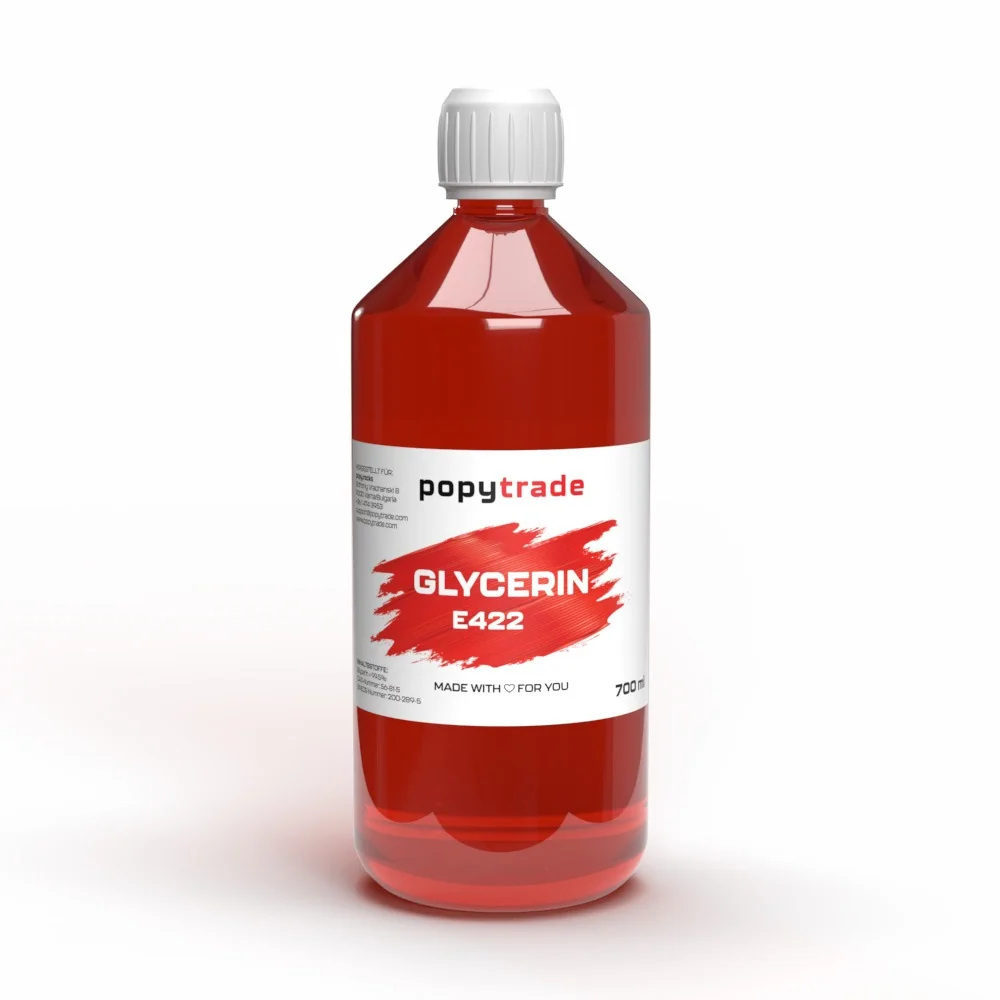
Anyone creating their own flavour combinations for drinks, baked goods, or desserts needs reliable raw materials for DIY mixing as a foundation. Instead of buying pre-made blends, mixing your own lets you decide which flavour takes centre stage and how intensely the aroma comes through. In the kitchen, two tried-and-tested food raw materials are ideal for this: vegetable glycerin and propylene glycol.
Key Takeaways
- For DIY flavour mixes, vegetable glycerin (E422) and propylene glycol (E1520) are the primary food-grade carrier ingredients.
- Propylene glycol carries food flavourings especially directly, while glycerin provides a rounder, mildly sweet texture.
- When purchasing, look for tested food raw materials clearly declared as E422 or E1520.
- Both raw materials can be flexibly combined for drinks, baked goods, and desserts depending on your desired recipe.
Which Raw Materials for DIY Mixing Do You Need for Homemade Flavourings?
For your own flavour creations, you primarily need two flavour-carrying base ingredients: vegetable glycerin (E422) and propylene glycol (E1520) in certified food-grade quality.
Highly concentrated food flavourings are difficult to measure accurately on their own, as even the tiniest drop can overpower a batch. This is where a suitable flavour carrier comes in. It dilutes the concentrate evenly, makes dosing easy to manage, and prevents aroma molecules from settling unevenly in your food or drink.
In food production, glycerol (glycerin) and propylene glycol have long been essential kitchen staples. While glycerin acts as a humectant and smooth base, propylene glycol as an E1520 additive takes on the role of a direct flavour carrier. Anyone preparing their own recipe ideas on the Shake & Enjoy principle has the complete foundation ready with these two components.
How Do Vegetable Glycerin E422 and Propylene Glycol E1520 Differ?
Vegetable glycerin is thicker and mildly sweet, whereas propylene glycol remains thinner in consistency and binds flavour compounds particularly quickly.
Vegetable glycerin E422 – often referred to as glycerin VG – is derived from plant fats or oils and carries the EU designation as glycerin food additive E422. Thanks to its viscous consistency, it adds noticeable body to blends and brings a mild, subtle sweetness naturally. Especially with fruity, creamy, or dessert-style food flavourings, this property rounds off the taste profile without masking the character of the main ingredient.
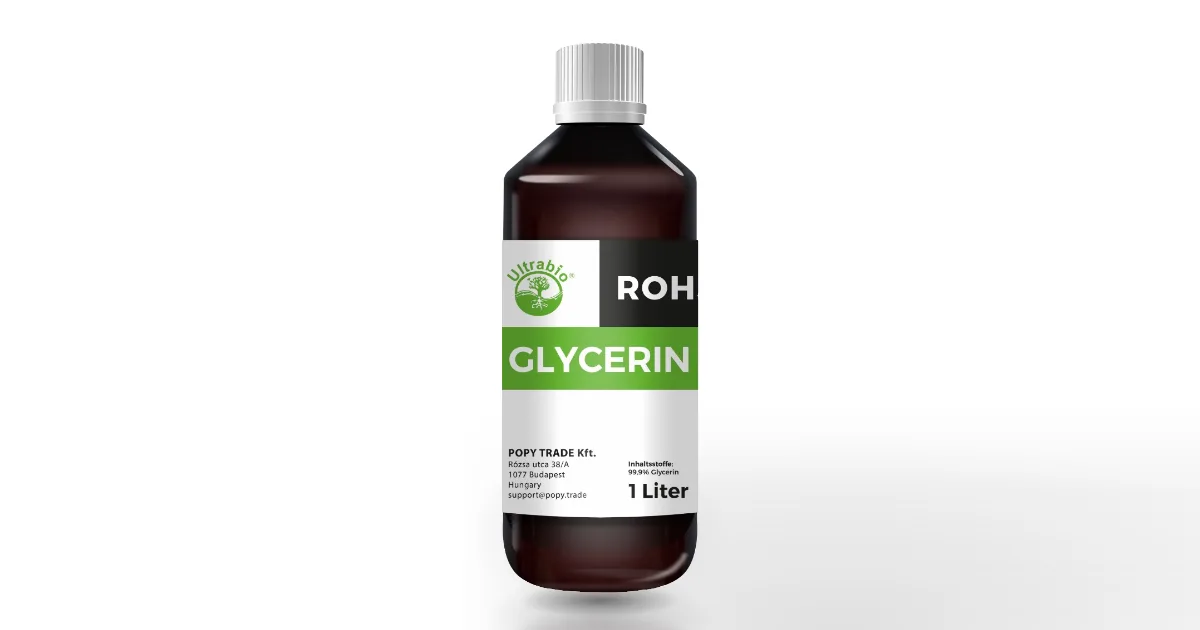
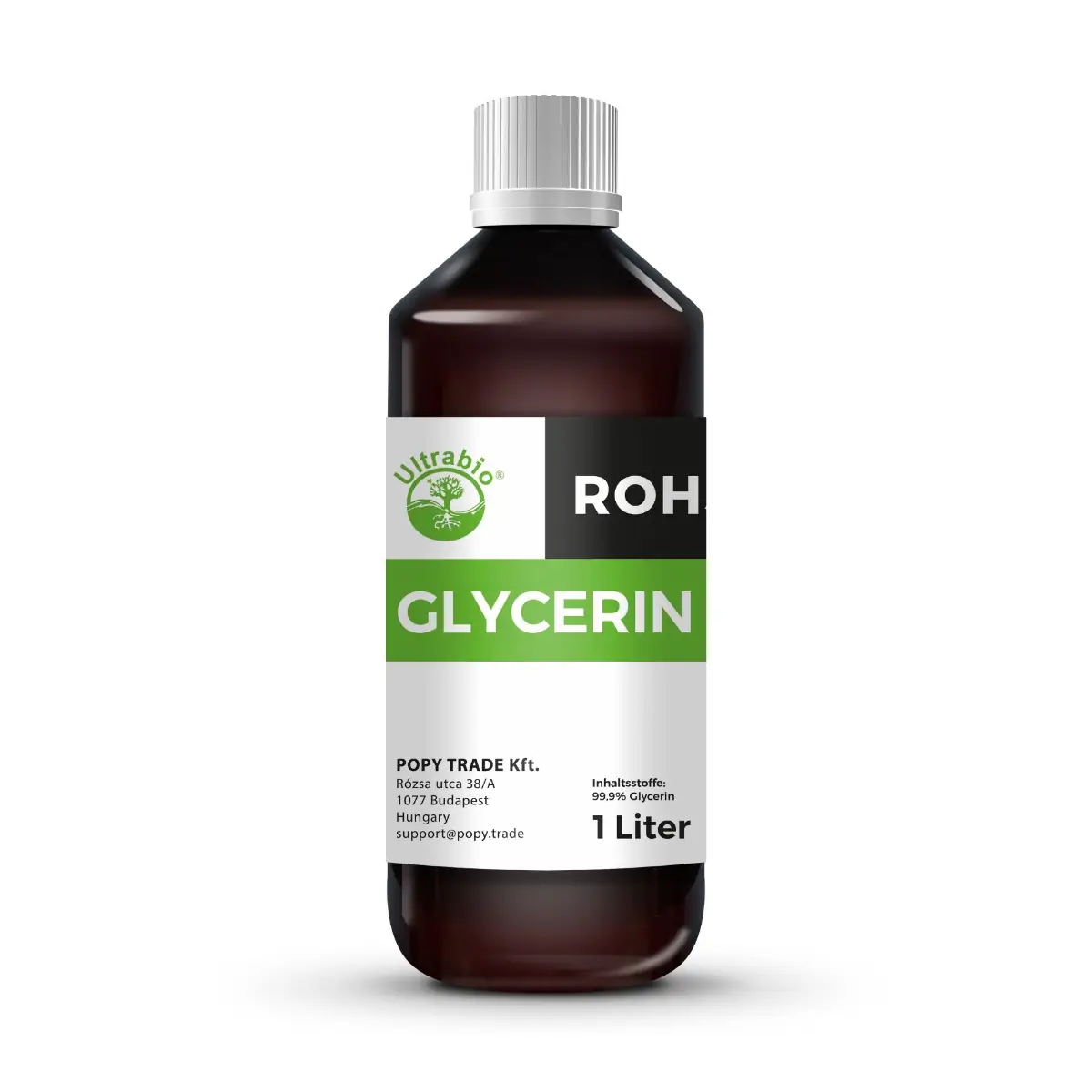
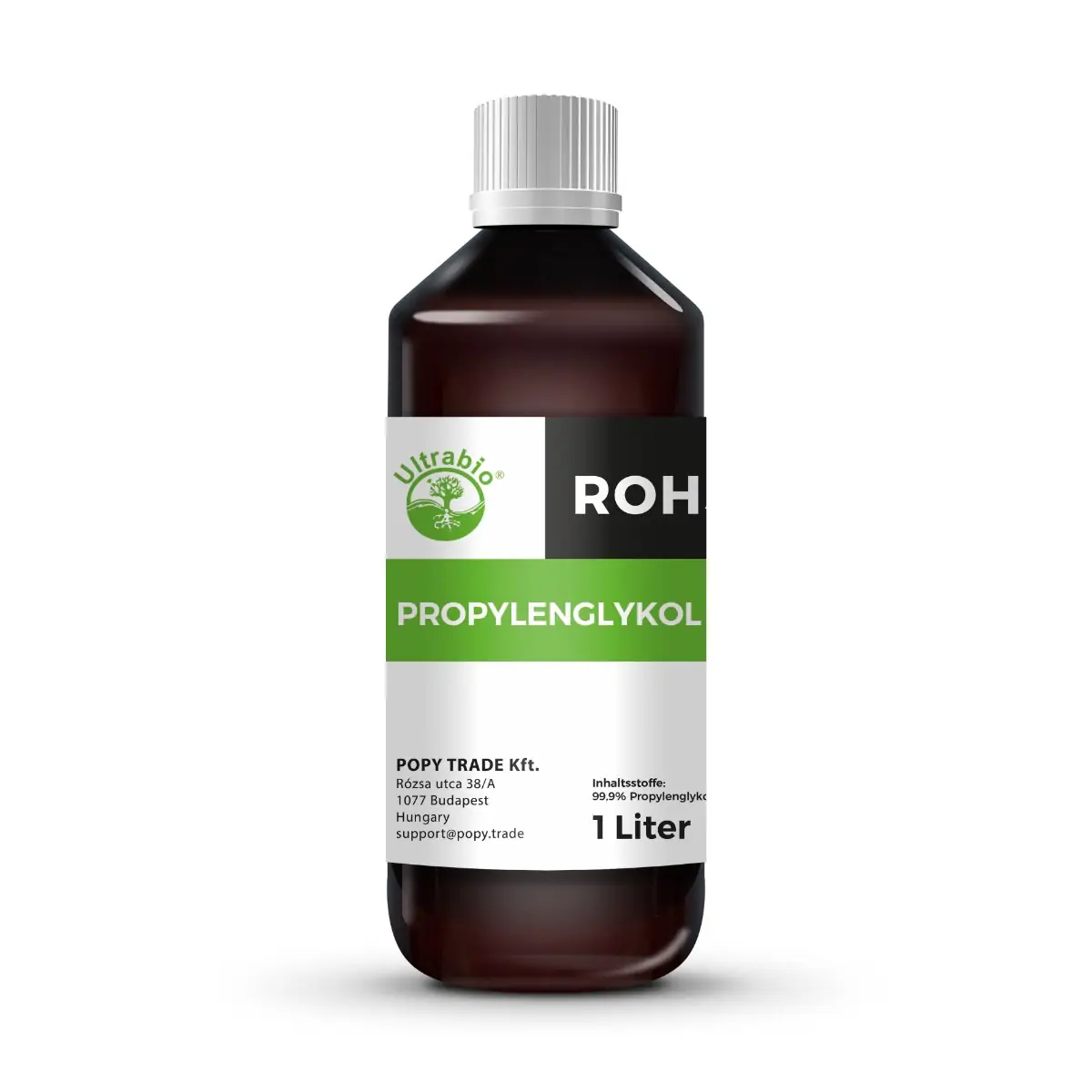
The properties of propylene glycol sit at the opposite end of the spectrum. Propylene glycol E1520 is clear, noticeably thinner, and virtually neutral in taste. As an E1520 food additive, it absorbs flavour components rapidly and releases them accurately in both cold and warm preparations. When you want to highlight crisp, finely nuanced flavour profiles, this carrier is the ideal choice. To get started right away, you can find proven single components such as Ultrabio Raw Materials Vegetable Glycerin E422 VG and Ultrabio Raw Materials Propylene Glycol E1520 PG.
Our Flavour Recommendations
What Should You Look For in Food-Grade Quality and Purity?
The key factors when buying are a clear declaration as a food additive and a documented high purity level free from unwanted by-products.
Not every chemical from a hardware or industrial supplier belongs in the kitchen. When buying glycerin and propylene glycol, the label must explicitly state food-grade glycerin or food-grade propylene glycol. Only tested food raw materials undergo strict controls for consumption and ensure that no technical residues alter the taste.
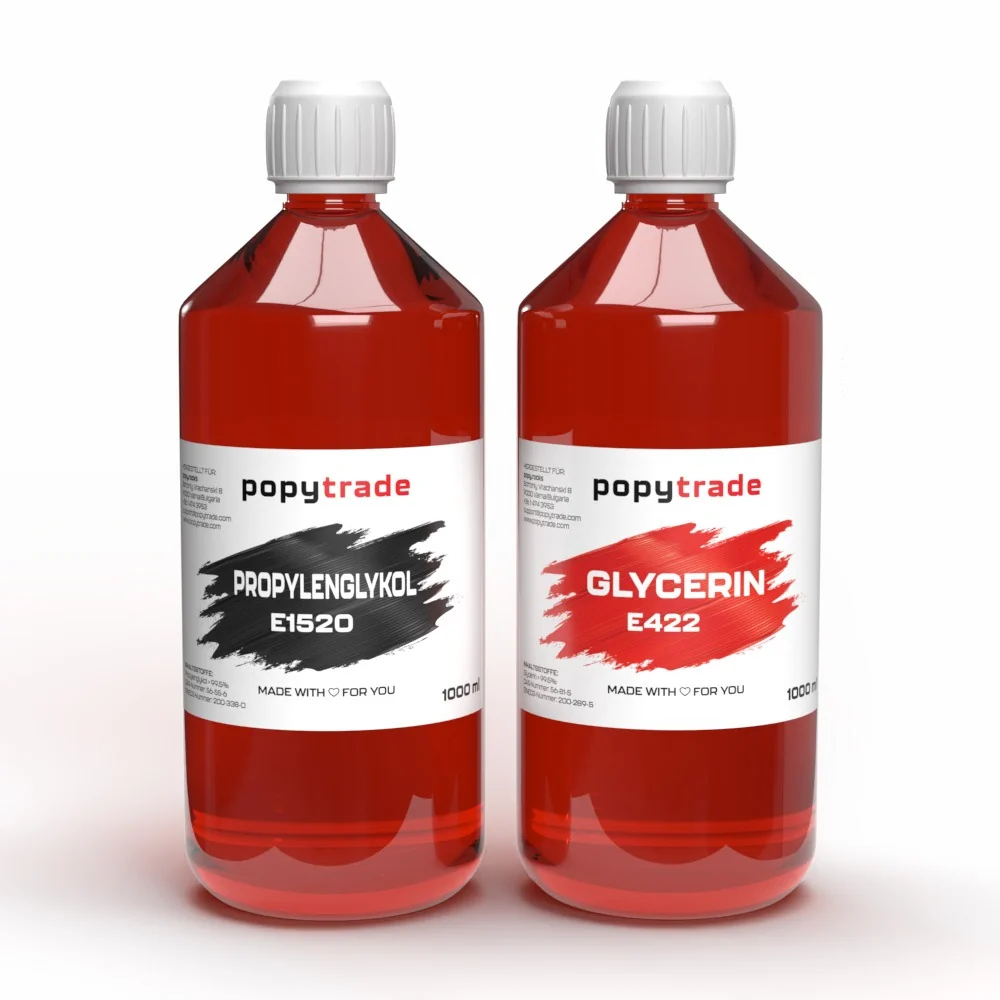
Reputable glycerin manufacturers also clearly state the exact E-number – namely food-grade glycerin E422 and propylene glycol E1520 – along with the purity level. High-purity products such as POPY TRADE Vegetable Glycerin VG E422 99.5% or POPY TRADE Propylene Glycol PG E1520 99.5% give you confidence that you are working with pure starting ingredients. This keeps your DIY flavour mix free from unwanted off-notes.
Which Bottle Sizes and Sets Are Worth Buying?
The right container size depends on whether you are testing your first recipe ideas or regularly preparing larger supplies for your kitchen.
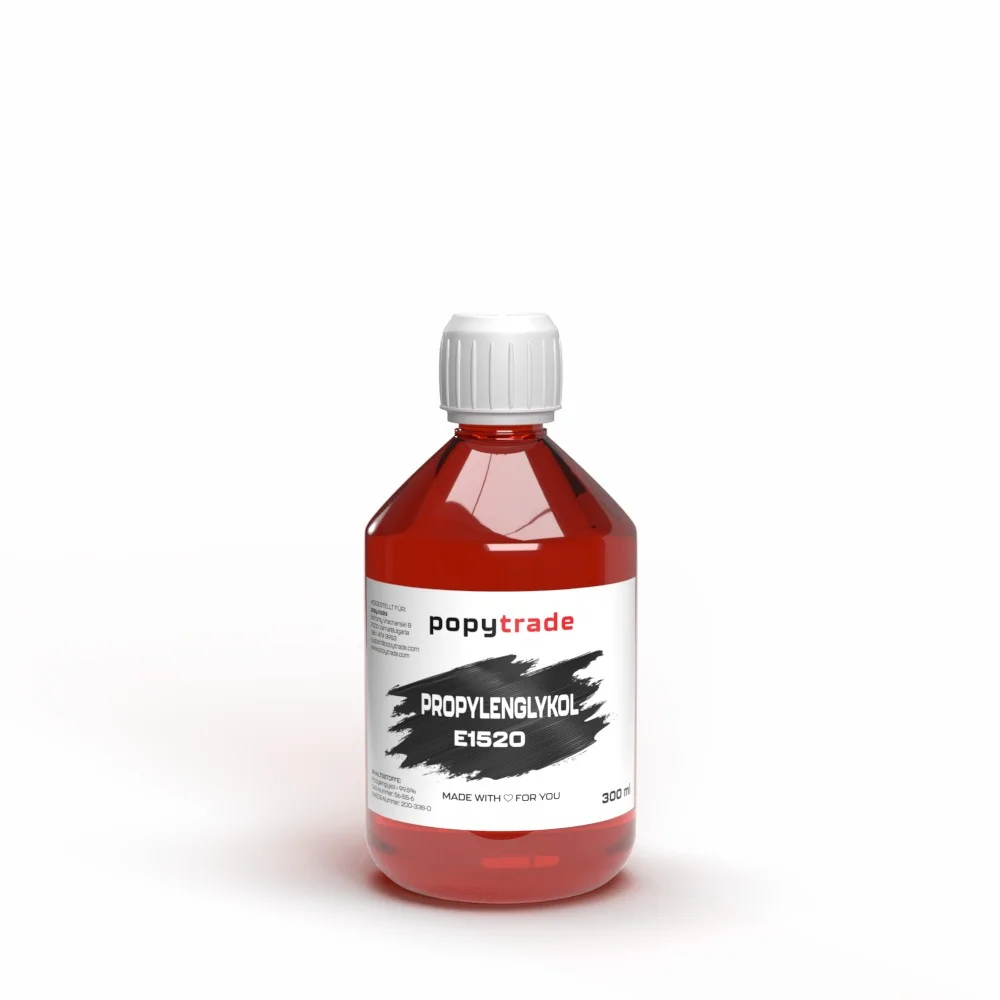
If you are just starting to explore how different food flavourings perform with varying carrier ratios, handy individual bottles are a smart choice. For targeted needs, options like POPY TRADE 700 ml Glycerin and POPY TRADE 300 ml Propylene Glycol work well when you prefer a smoother, glycerin-rich base.
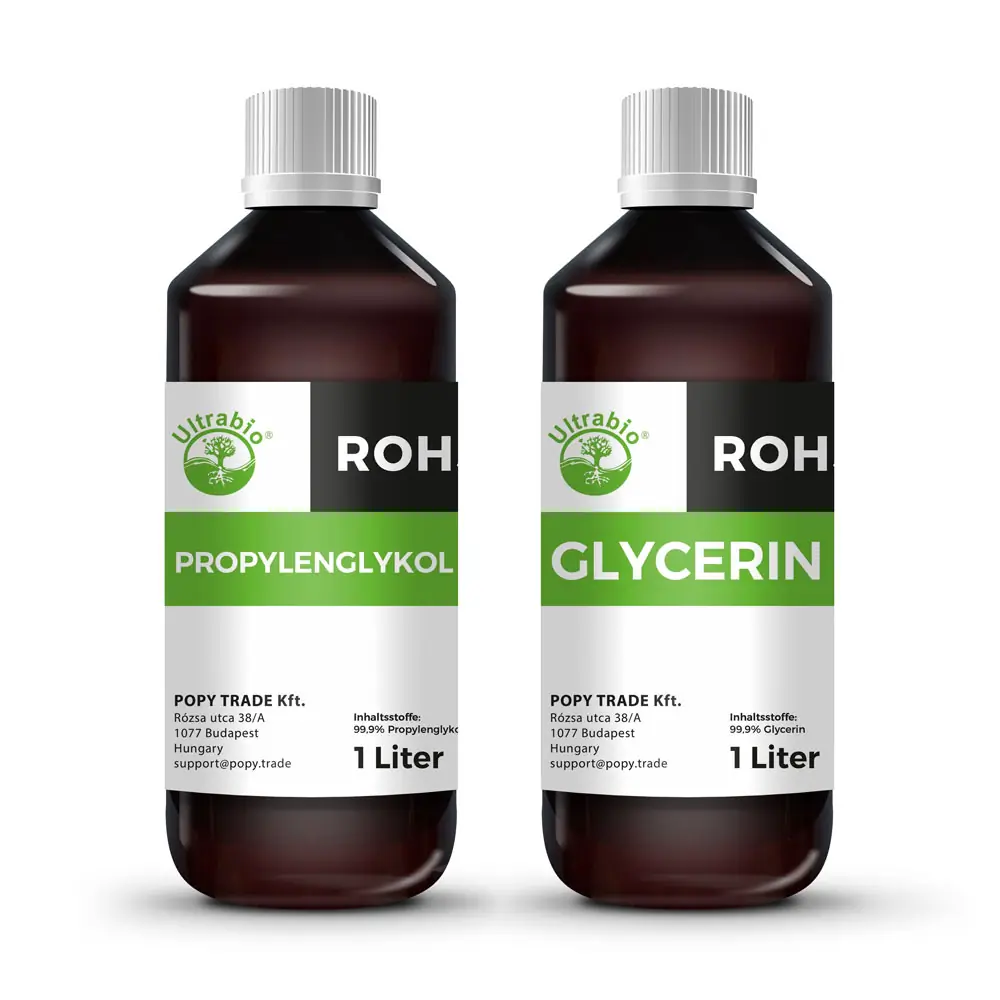
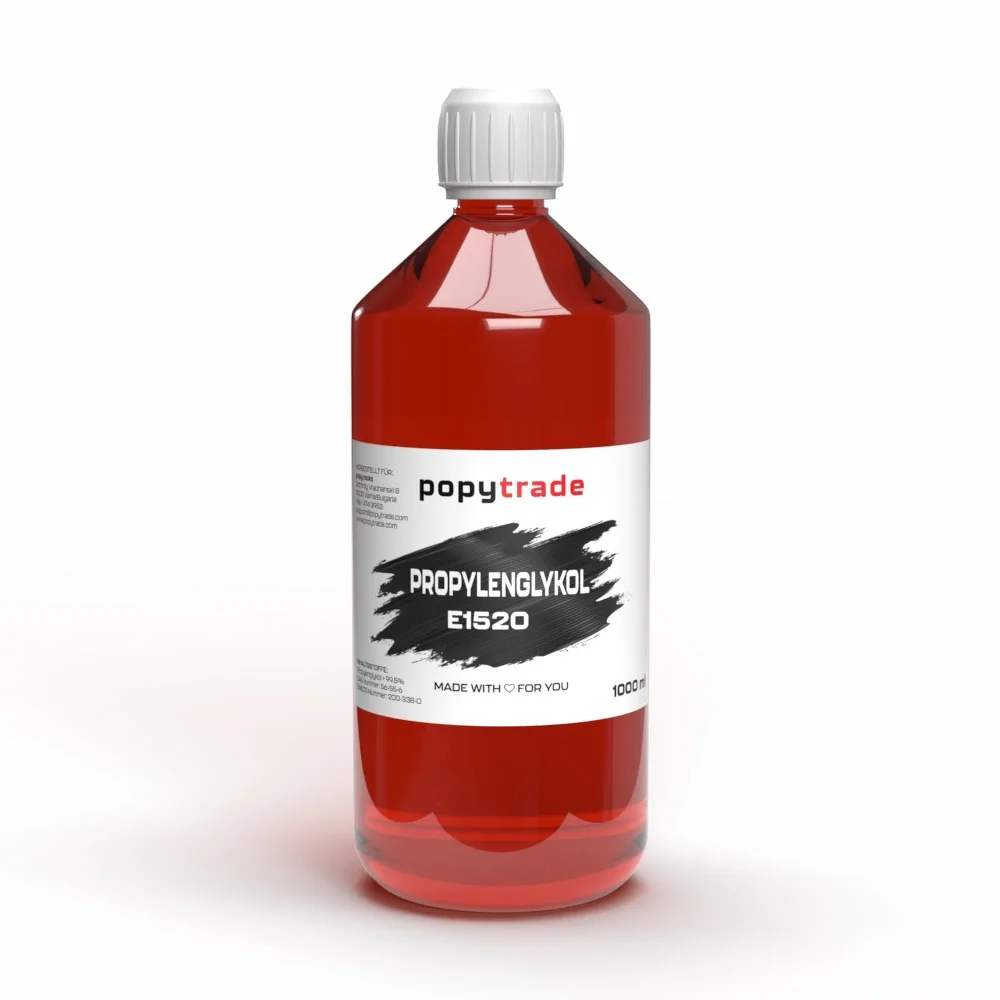
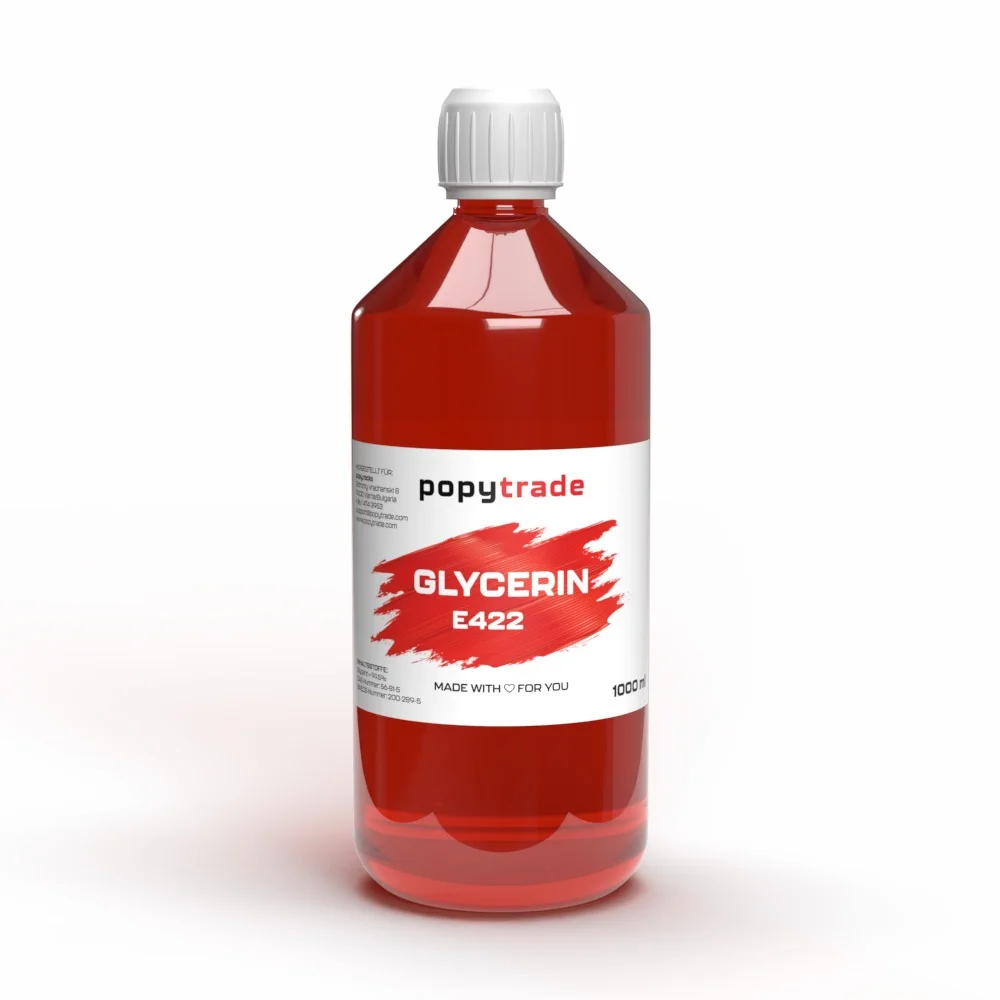
If you mix frequently and want the flexibility to switch between different ratios, stocking up on 1 litre of glycerin and its counterpart is worthwhile. Value bundles such as POPY TRADE 1 Litre Each Glycerin & Propylene Glycol or Ultrabio Raw Materials 1 Litre Each Glycerin & Propylene Glycol cover both sides neatly. This keeps your pantry well stocked with the right supplies for a long time while you earn Runes in the shop for upcoming orders.
Step-by-Step Guide: Mixing Glycerin and Propylene Glycol
When mixing glycerin and propylene glycol, always work with clean vessels and strictly follow the manufacturer's instructions for each ingredient.
Keeping your workspace organised saves guesswork later. Before opening any bottles, lay out all your utensils and follow these steps:
- Clean your workspace and vessels: Rinse measuring jugs, funnels, and sealable mixing bottles thoroughly with hot water and allow them to dry completely.
- Set your ratio: Decide based on your desired recipe whether your base should be more fluid (more propylene glycol) or thicker and milder (more vegetable glycerin).
- Combine the carriers: Pour the thicker glycerin E422 into your mixing vessel first, followed by the more fluid propylene glycol E1520, so that both fluids blend together more easily.
- Add the food flavouring: Check the exact dosage on the label of your chosen food flavouring and add the amount specified by the manufacturer.
- Shake & Enjoy: Seal the bottle tightly and shake the mixture vigorously until no streaks remain visible.
- Label and store: Write the date, mixing ratio, and flavour on a label and place the bottle in a cool, dark spot.
What Are Homemade Flavour Carriers Used For in the Kitchen?
Prepared bases made from glycerin and propylene glycol distribute concentrated food flavourings evenly in drinks, desserts, and cake batters.
In cold applications such as homemade lemonades, iced teas, or syrups, the propylene glycol portion in particular ensures that fruity or tart notes dissolve quickly in the glass. In ice cream bases, whipped creams, frostings, or sponge batters, vegetable glycerin brings its strengths into play: it supports a smooth texture and helps retain moisture in baked goods.
For experimental kitchen blends following the Shake & Enjoy approach – such as custom coffee syrups, flavoured yoghurt toppings, or sugar glazes – a pre-mixed base gives you a dependable foundation. Instead of dealing with tiny drops every time, you work with a balanced carrier solution.
Frequently Asked Questions
Are Glycerin E422 and Propylene Glycol E1520 approved for food use?
Yes, both substances are approved as food additives under the numbers E422 (glycerin) and E1520 (propylene glycol). When buying propylene glycol as well as glycerin, always make sure food-grade quality is explicitly stated on the container.
What do pure glycerin and propylene glycol taste like?
On its own, vegetable glycerin has a mild, slightly sweet taste and feels somewhat smoother on the tongue. Pure propylene glycol tastes largely neutral with a minimal hint of sharpness, which is why it carries flavours cleanly without altering them.
Can I use glycerin and propylene glycol individually instead of as a set?
Yes, depending on your recipe, you can also use either raw material on its own as a carrier. However, a set offers the advantage of tailoring consistency and flavour release flexibly to different food flavourings.
How should I store raw materials for DIY mixing?
Store both unopened and opened bottles upright in a cool, dry place protected from direct sunlight. Screw the cap back on tightly after each use so that neither moisture nor kitchen odours can get inside.
Last updated: November 2026 · Author: Popy