
PG & VG: Vegetable Glycerin and Propylene Glycol Explained
Vegetable glycerin is the viscous, plant-derived raw material that provides body and consistency in DIY flavour mixes—together with propylene glycol, it forms the fluid base in which food flavourings disperse evenly. In this guide, we break down both raw materials: origins, differences, buying criteria, and practical mixing tips for beverages, baked goods, and shake-&-enjoy mixes. No sales hype, just substance.
Key Takeaways
- Vegetable glycerin (VG) is a plant-derived, syrupy carrier for food flavourings and a versatile ingredient in many food items.
- Propylene glycol (PG) is much more fluid than VG and disperses flavour quickly and evenly throughout the mix.
- VG gives your DIY mix body and consistency, while PG ensures the fine dispersal of taste.
- To mix, combine VG and PG with the flavour concentrate and shake thoroughly.
What Is Vegetable Glycerin and What Is It Used For?
Vegetable glycerin is a syrupy raw material derived from plant sources, used in food production as a carrier for flavourings and as an ingredient in confectionery, baked goods, and beverages.
Its consistency is noticeably more viscous than water. This exact characteristic makes VG valuable in mixing practice: it adds body to a DIY flavour mix, retains moisture in the product, and carries subtle sweet notes that pair well with bold flavour profiles. You will also encounter this raw material on ingredient lists under the designation E422—more on that below.
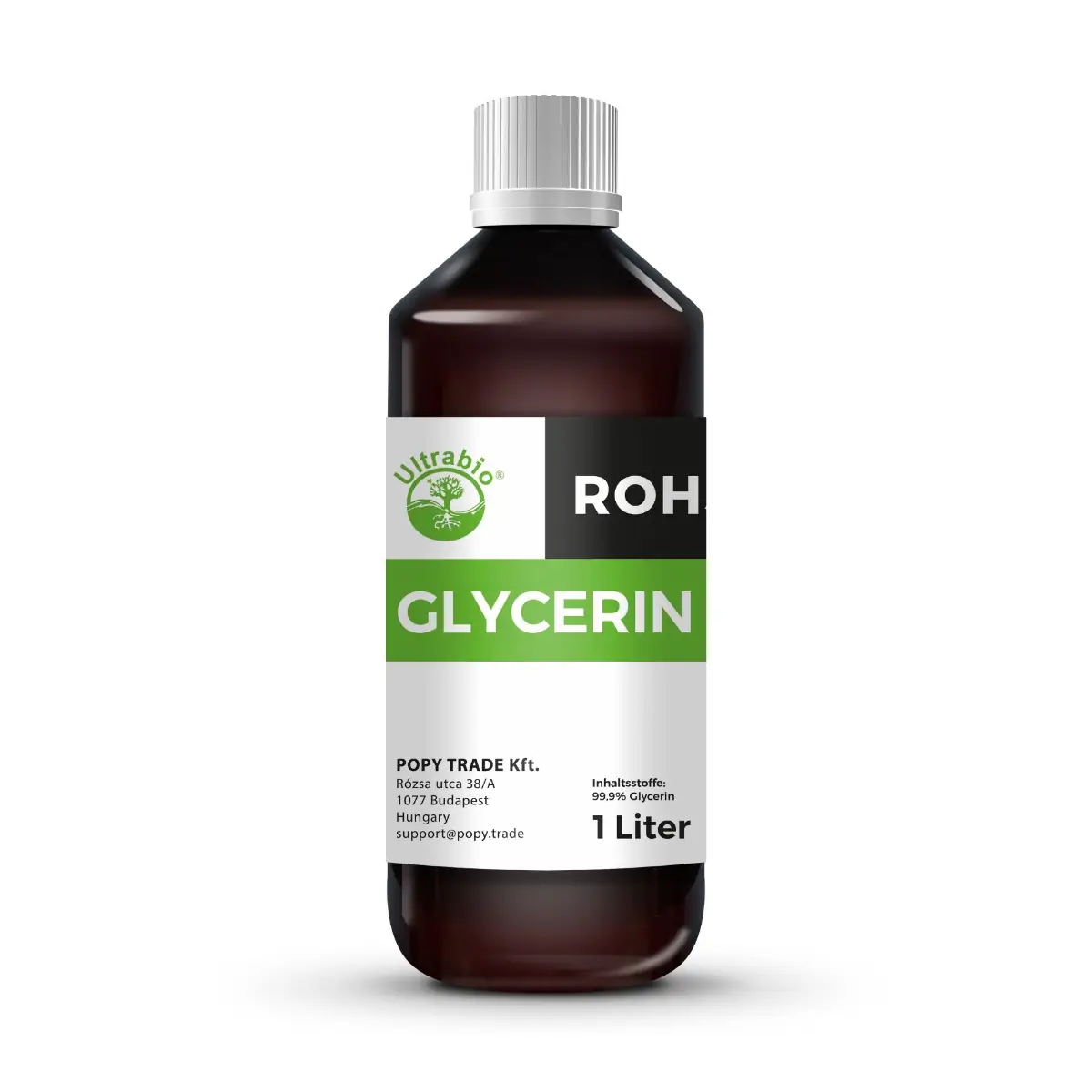
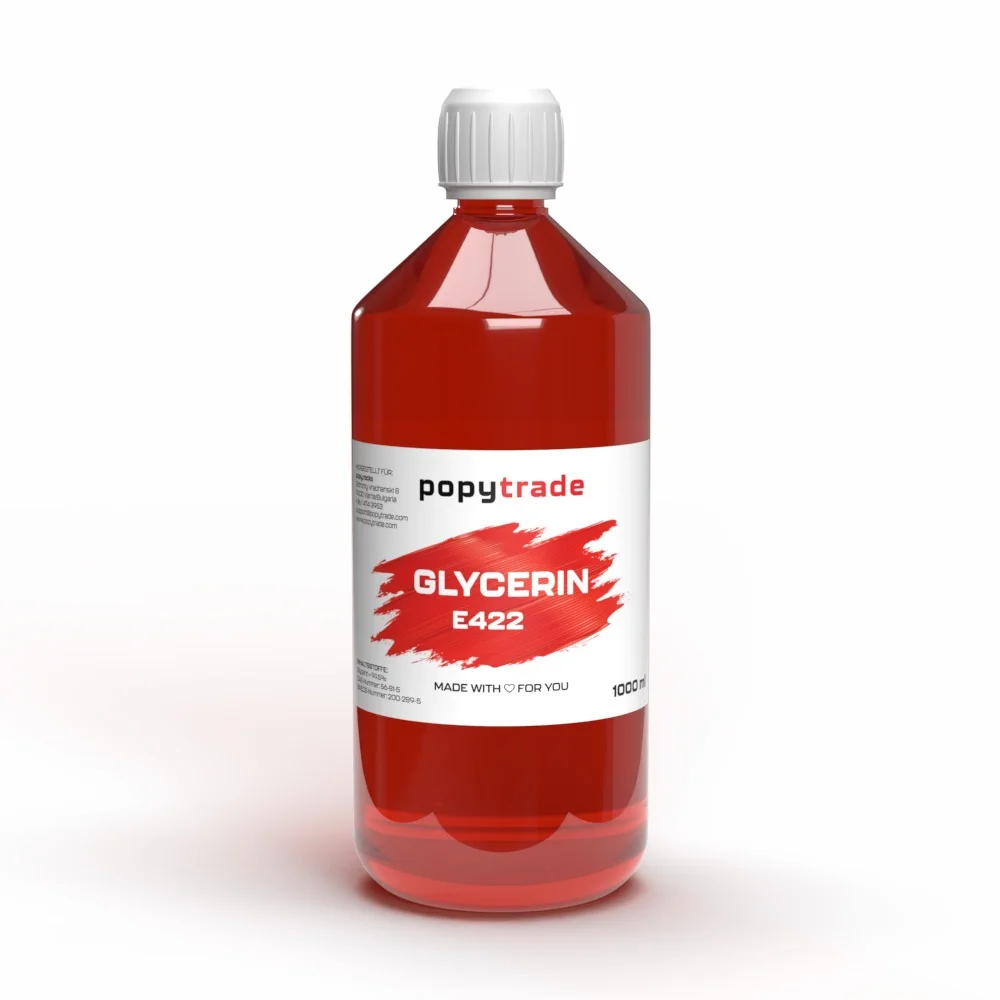
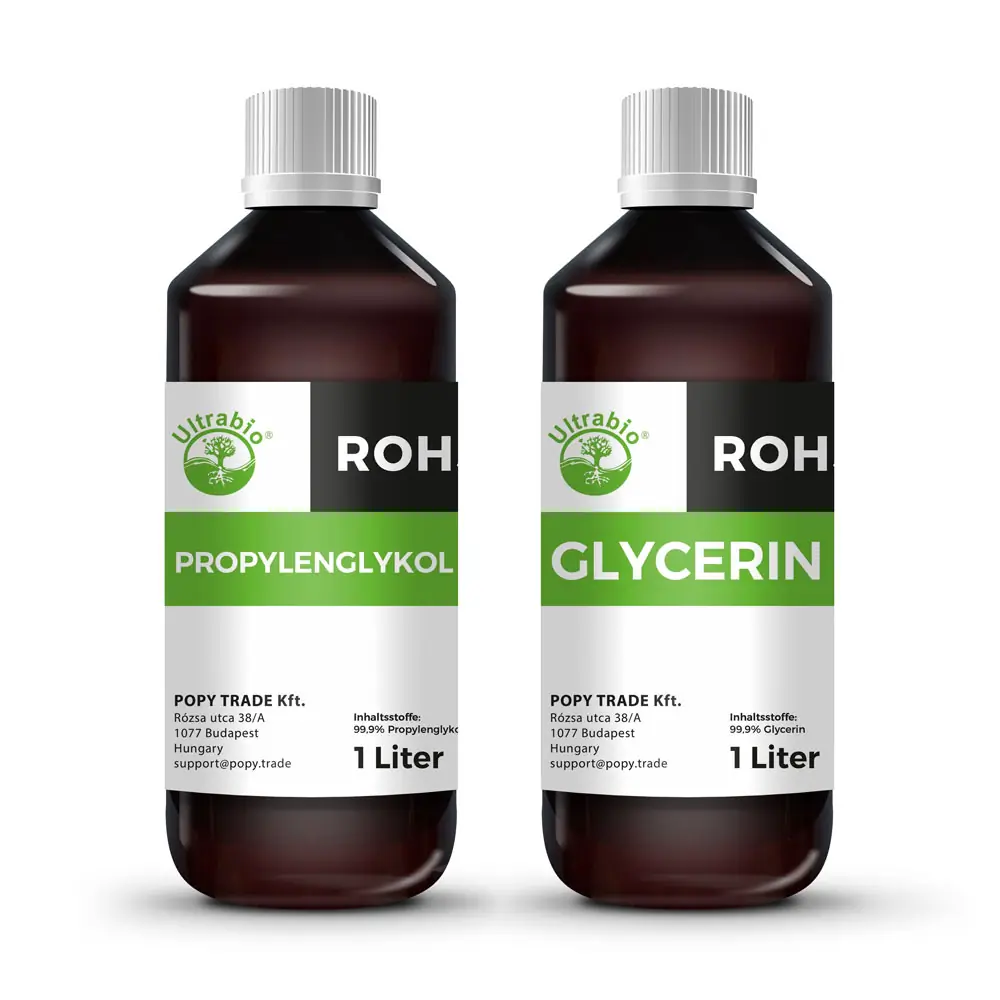
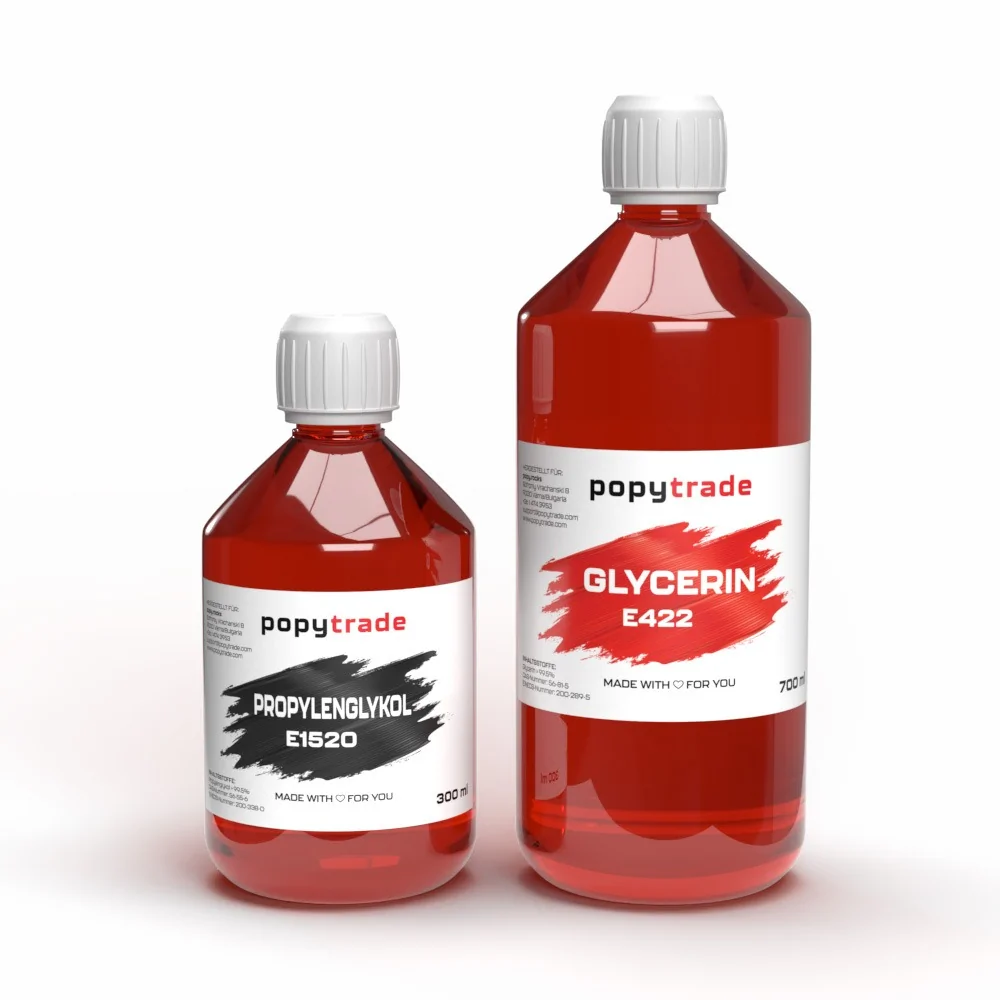
In our assortment, you will find VG both individually and in balanced combinations, such as Ultrabio Rohstoffe Pflanzliches Glycerin E422 VG and POPY TRADE pflanzliches Glycerin VG E422 99,5%. For an overview of all container sizes and raw ingredients, start in the Vegetable Glycerin and Raw Materials category.
What Is Propylene Glycol and What Does It Add to the Mix?
Propylene glycol is the low-viscosity counterpart to vegetable glycerin: a clear, easily flowing fluid carrier that blends effortlessly with VG and flavour concentrates.
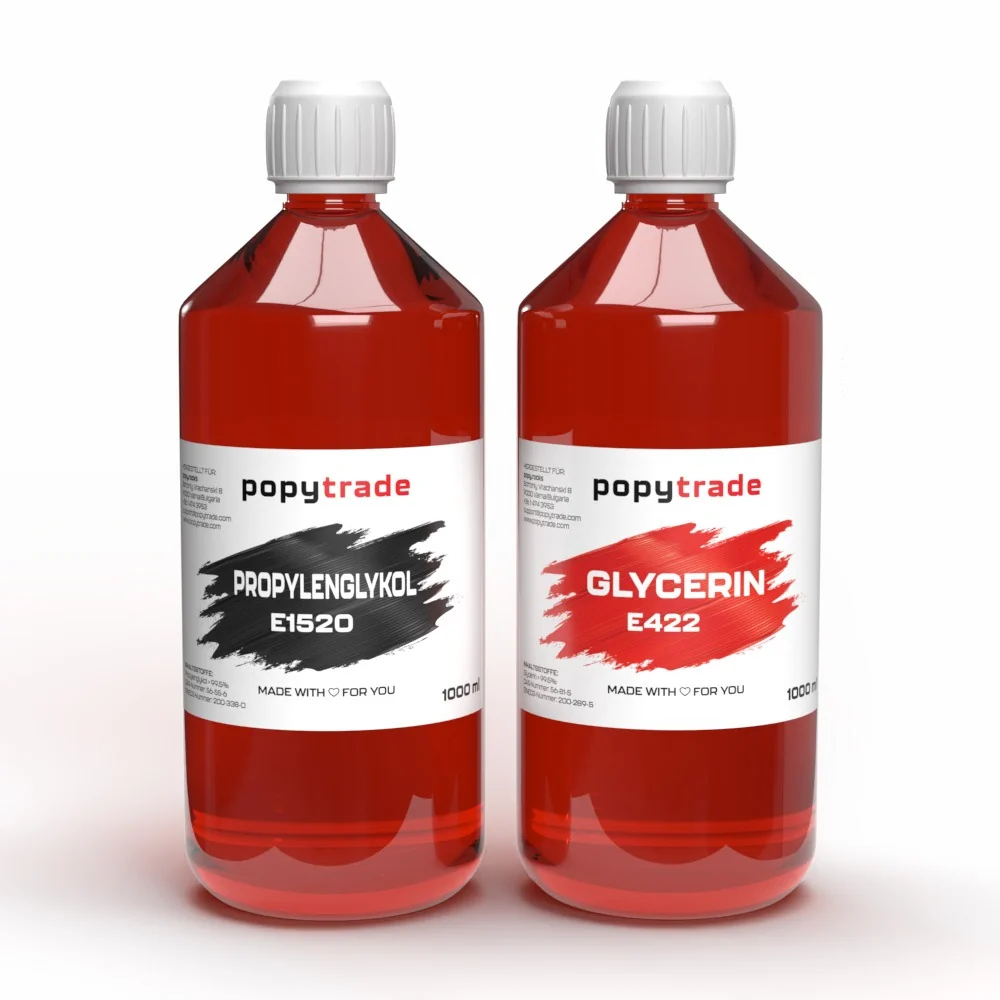
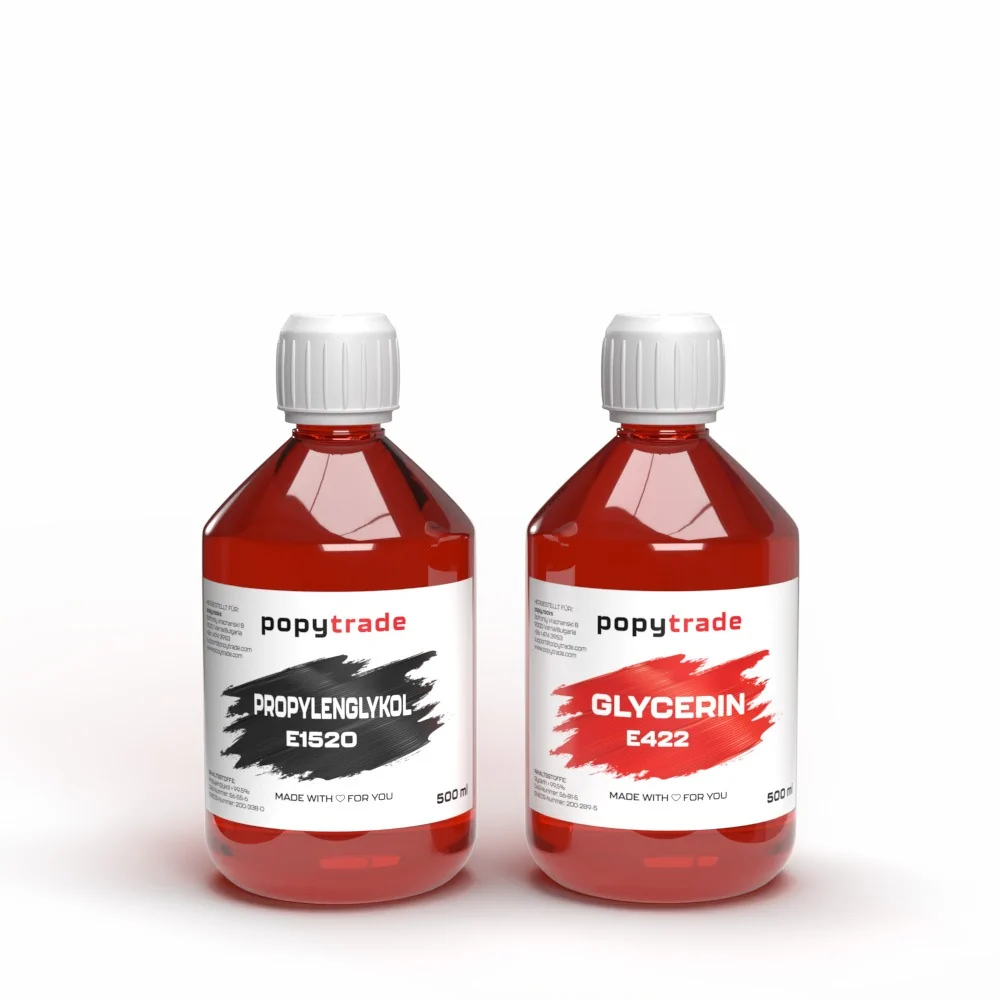
Practically speaking, PG is responsible for flavour distribution within the mix. Because it flows more easily, it dissolves and disperses the flavour concentrate evenly instead of trapping it in the viscous VG phase. A mix made solely of VG risks tasting sluggish; a mix of only PG feels thin. Therefore, these two raw materials are not an either-or choice, but a team—which is why they are also available ready-matched in a double pack, such as POPY TRADE Je 1 Liter Glycerin & Propylenglykol or POPY TRADE Je 500ml Glycerin & Propylenglykol.
How Is Vegetable Glycerin Produced?
Vegetable glycerin is obtained during the processing of plant oils and fats—the raw material is extracted as part of the processing operation and subsequently purified.
Anyone searching for "vegetable glycerin production" is looking for precisely this process: the starting points are plant fat sources, not animal ones. Purification and refining determine the final batch quality. For you when mixing, the main priority is the outcome: a clear, syrupy, food-grade raw material that blends cleanly with PG and flavouring without introducing any unwanted foreign taste to the mix.
By the way, there is nothing mysterious behind the designation E422: it is simply the official number under which glycerin is listed in food ingredients registers. When buying, this is your indicator to distinguish food-grade quality from industrial-grade goods.
What Should I Look for When Buying VG and PG?
Buy VG and PG in food-grade quality and check for the E422 designation alongside transparent purity specifications.
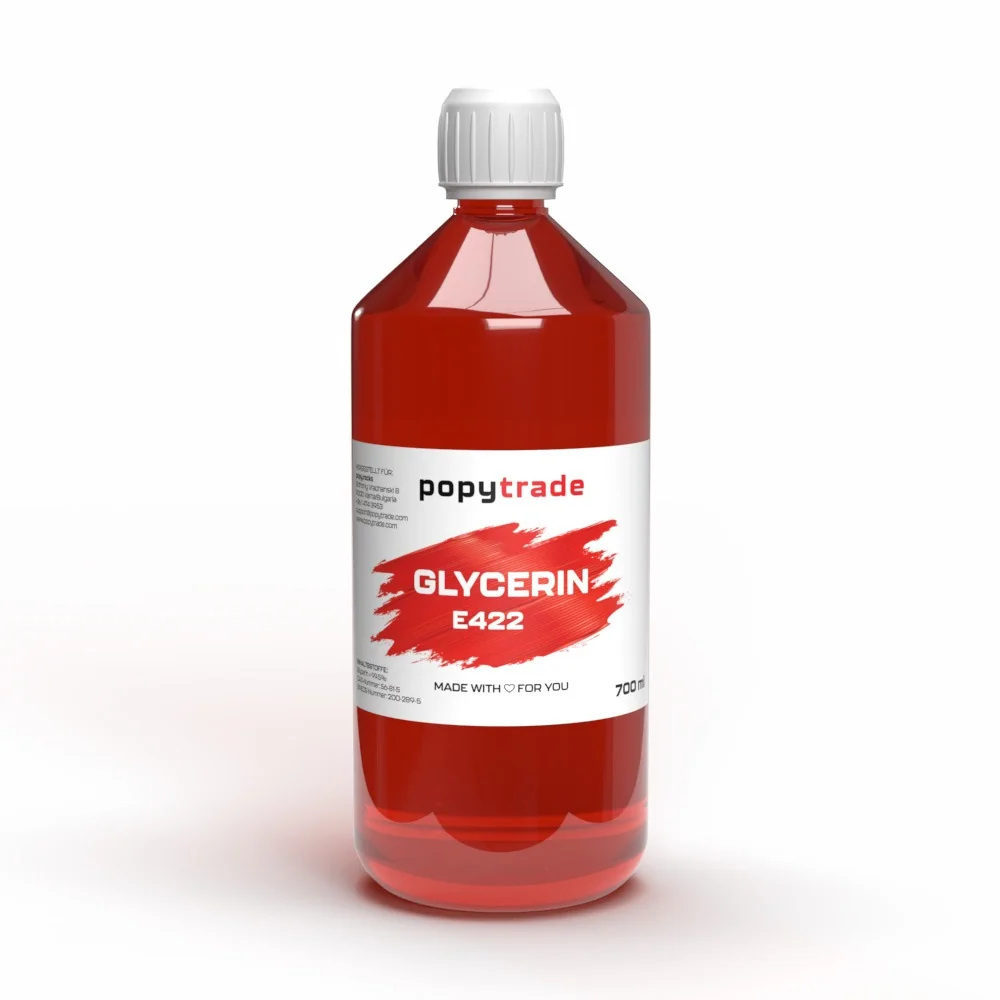
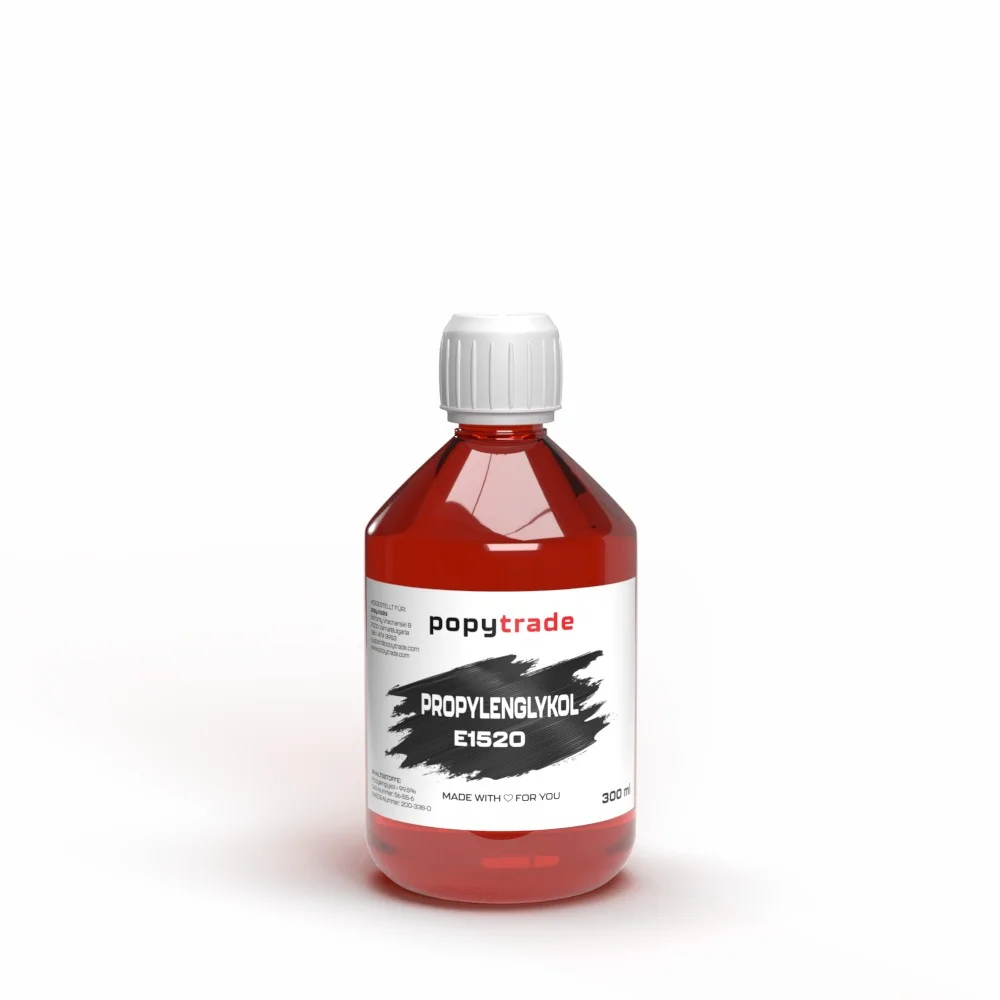
Three criteria help you make the right choice. First, the category: raw materials intended for food use, never industrial products. Second, the purity stated on the bottle—it should be clearly declared. Third, the container size: if you only occasionally blend a new flavour, you do not need a canister, just a small bottle. If you mix regularly, however, choosing a 1-litre container saves you from frequent reordering. Great starter options include sizes like POPY TRADE 700ml Glycerin or POPY TRADE 300ml Propylenglykol, while larger supplies benefit from options like Ultrabio Rohstoffe Je 1 Liter Glycerin & Propylenglykol.
The fact that many people initially search in well-stocked food retailers is evident from search queries like "vegetable glycerin REWE". For practical mixing, however, you are much better served by a dedicated selection of food-grade options in tailored bottle sizes—offering everything you need in one place.
How Do I Mix a Food Flavouring?
You mix a food flavouring by combining VG and PG into a base, incorporating the flavour concentrate, and shaking the entire mixture vigorously.
We call this principle Shake & Enjoy for good reason. Specific mixing ratios depend on your recipe and the dosage instructions on the flavour bottle—it is best to follow these precisely rather than experimenting at random. Here is how it works step by step:
- Prepare the ingredients. Set out VG, PG, your flavour concentrate, a clean mixing container with a sealable lid, and a kitchen scale or measuring beaker.
- Measure the base. Measure VG and PG according to your recipe's ratio and pour both into the mixing vessel.
- Incorporate the flavour. Add the concentrate drop by drop, treating the manufacturer's dosage recommendation as an upper limit.
- Shake vigorously. Put the lid on, seal the container, and shake until the mixture looks uniformly clear.
- Let it steep. Allow the mixture to rest so the flavour disperses evenly, tasting it occasionally.
- Adjust and bottle. Carefully add more flavouring if needed, then transfer into a suitable storage bottle and label it.
Frequently Asked Questions
What is the difference between vegetable glycerin and propylene glycol?
Vegetable glycerin is syrupy and viscous, giving the mix body, while propylene glycol is much more fluid and disperses the flavour finely and evenly. Both raw materials complement each other in practice, which is why they are frequently purchased together.
What does the E422 label mean?
E422 is the identification code for glycerin on food ingredient lists. It appears on product packaging as well as in our descriptions for food-grade raw materials, helping you distinguish food grade from technical-grade products.
Can I buy vegetable glycerin in well-stocked food stores?
Generally, glycerin is categorized as a food ingredient, and search terms like "vegetable glycerin REWE" demonstrate retail demand. For DIY mixing, it pays to opt for raw materials with clearly declared food-grade status and in container sizes suited to your usage.
Which container size makes sense for beginners?
If you only occasionally mix a new flavour, a small bottle of each raw material is sufficient. For regular mixing, a 1-litre container or a matched VG and PG set is the better choice, as both ingredients are already coordinated.
Do I always need to mix a flavour fresh?
No. A blended base with flavouring can be stored in a clean, labelled container and adjusted whenever needed. Thorough cleanliness during bottling and an airtight seal are essential to keep the mixture consistent.
Enough theory: pick your container, mix your creation, and taste it for yourself. Your next loot of raw ingredients and flavours awaits in the Popytrade raw materials overview—and you collect loyalty runes along the way. – Popy
Last updated: October 2026 · Author: Popy